Designed around your outdoor space
Make the cooking area part of the deck brief
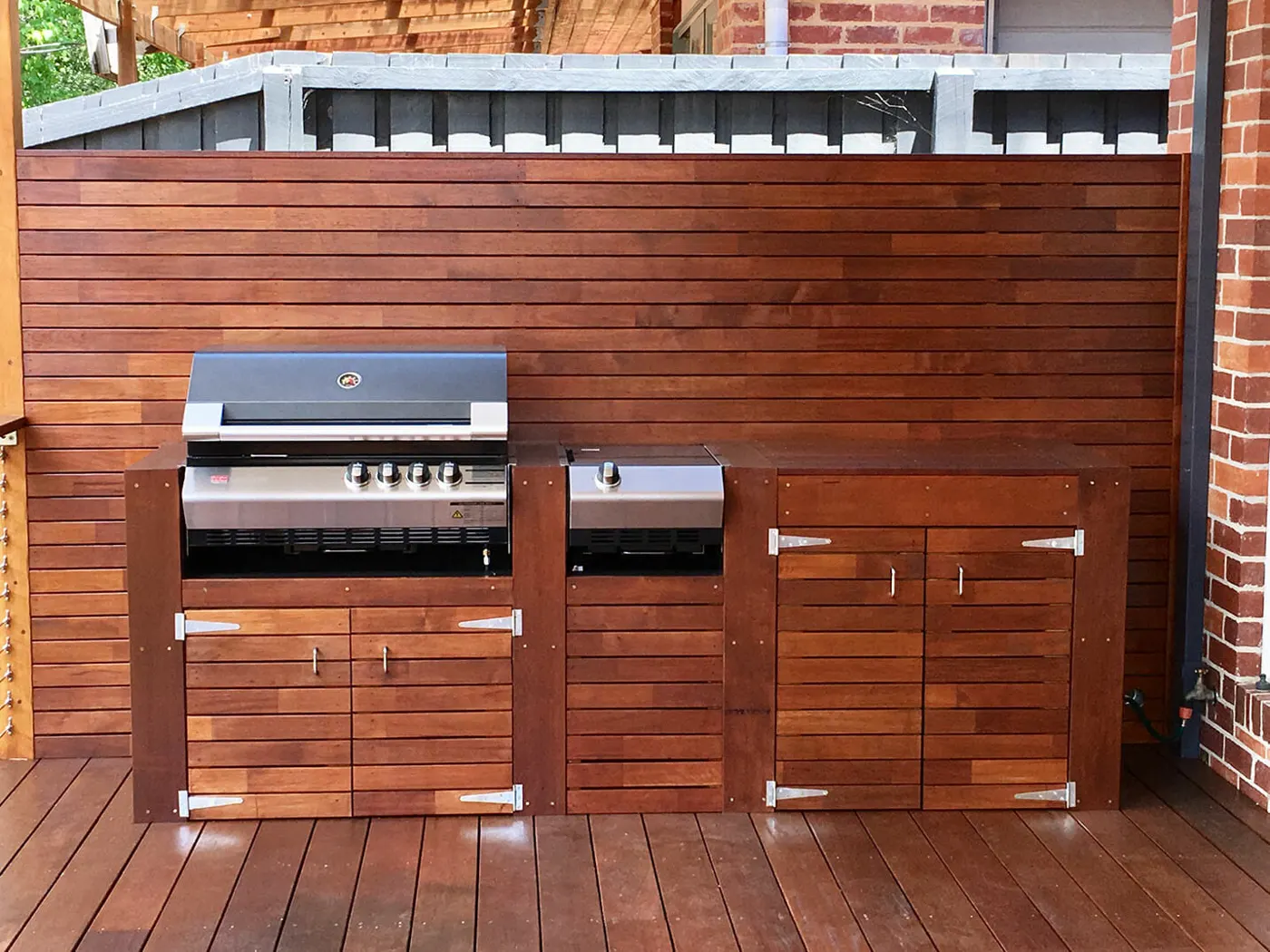
Decide whether the BBQ will support occasional weekend meals or regular outdoor entertaining. The answer affects bench space, storage, circulation and the relationship to the indoor kitchen. A cooking station tucked into a narrow corner may leave the cook isolated or force guests past a hot appliance. Map the way food, plates and people move before deciding on the cabinet position.
More about decks with built-in bbqs
A deck with a built-in BBQ should be designed around cooking, safe movement and the exact appliance—not just a cabinet shape. The BBQ, bench, deck structure and surrounding materials need to be coordinated before construction. Gas, electrical and plumbing work belong with appropriately licensed trades. This guide focuses on integrating the cooking area into the deck, while the alfresco kitchen page covers broader outdoor kitchen planning. Deck It Out offers decks with built-in bbqs across Melbourne’s serviced suburbs. Discuss your site and desired scope with Marc before settling the design.
The deck needs enough usable space after the BBQ and furniture are installed. Allow for the appliance lid, cabinet doors and people standing at the bench. A large platform is not automatically a successful entertaining layout if its clear routes are poor. Discuss the cooking zone alongside seating and stairs so the design works as one outdoor area rather than a deck with an appliance added afterwards.
Planning your decks with built-in bbqs
Choose the exact appliance early
Built-in BBQs have product-specific requirements for installation, clearances, ventilation and surrounding materials.
Read more about Choose the exact appliance early
A generic opening drawn before the appliance is selected may be unsuitable for the eventual model. Obtain current installation instructions and dimensions before cabinets or framing are finalised. The information should be shared with the relevant trades, not left in a box until installation day.
Consider access for servicing and replacement as well as the initial fit. Appliances may change over the life of the deck, but a tightly enclosed installation can make that difficult. Ask how the BBQ would be removed and which surrounding components are removable. Do not assume that a freestanding BBQ can be converted into a built-in unit; its manufacturer must permit the proposed installation.
Clearances and combustible materials
Deck boards, cabinet materials, walls and an overhead structure all need to be considered in relation to the appliance.
Read more about Clearances and combustible materials
Follow the exact manufacturer’s requirements and applicable installation rules, confirmed by the responsible licensed trades. A decorative lining or benchtop does not automatically protect a combustible structure from heat. Avoid making up a universal clearance that applies to every BBQ.
Check the operating appliance, not only its dimensions when closed. Heat, smoke and an open lid can change the relationship to walls and roofing. A pergola or enclosed alfresco area may introduce further constraints. If the selected appliance is not suitable for the proposed setting, revise the layout or product rather than treating extra cladding as an assumed solution. Safety should be resolved before visual finishes are approved.
Supporting the BBQ and bench structure
A built-in cooking area can introduce loads that differ from ordinary deck furniture.
Read more about Supporting the BBQ and bench structure
Benchtops, cabinetry, appliances and stored items should be included in the structural design. Position and support matter as much as total weight. The deck frame should be assessed for the planned installation rather than assumed capable because it feels firm underfoot.
A replacement deck offers a chance to coordinate supports from the start. On an existing deck, inspection and strengthening may be required, and the final scope may depend on opening concealed areas. Ask whether cabinets are supported independently or through the deck structure and how the detail will remain inspectable. The finished boards should not be expected to carry a heavy built-in assembly without an appropriate supporting design.
Gas, power and water: separate responsibilities
Services need a clear plan before the deck closes off access.
Read more about Gas, power and water: separate responsibilities
Confirm whether the appliance uses a fixed gas supply or another permitted arrangement, and allocate gas work to an appropriately licensed professional. Electrical equipment and outlets need suitable location and protection. If a sink is planned, plumbing and drainage require their own design and licensed installation.
The deck builder, cabinet supplier and service trades should agree who provides access openings, supports and reinstatement. Service valves and connections must not be buried behind permanent finishes without an approved access route. Ask for the relevant documentation at handover. A combined outdoor project can be convenient, but it does not remove the need for each regulated trade to take responsibility for its work.
Ventilation, smoke and the surrounding home
An outdoor BBQ still needs installation appropriate to its setting.
Read more about Ventilation, smoke and the surrounding home
Walls, screens and roof structures can affect ventilation and smoke movement. Do not assume that a space labelled alfresco is automatically suitable for any appliance. Have the actual level of enclosure assessed against the appliance instructions and relevant requirements before committing to a layout.
Consider nearby windows, doors and seating areas as practical design factors. Smoke drifting through the living room or directly across the dining table can make an otherwise attractive deck frustrating to use. These issues need a site-specific discussion, especially where boundaries or prevailing winds constrain the options. The goal is a cooking area that can operate as intended, not merely an appliance that fits the drawing.
Surfaces that can be cleaned and maintained
Food, grease and spills affect the deck and nearby finishes.
Read more about Surfaces that can be cleaned and maintained
Choose materials with maintenance instructions suited to the cooking environment, and protect surfaces as directed by their suppliers. A board’s general durability does not mean every cleaner or degreaser is appropriate. Keep product advice for the deck, benchtop and cabinet surfaces together.
Design access for cleaning around and beneath the BBQ. Narrow gaps that collect debris can be awkward to maintain, while permanently closed areas may hide moisture or service connections. Discuss drainage and the management of runoff rather than washing residues into an unsuitable area. Cleaning is part of practical design: a beautiful cooking zone that cannot be kept accessible or clean may become an ongoing burden.
Integrating seating, lighting and a comfortable route
Guests should be able to move between the house, table and garden without crowding the cooking area.
Read more about Integrating seating, lighting and a comfortable route
Built-in seating can make good use of space, but should not push people too close to the appliance or obstruct access. Show seating depth and actual furniture dimensions in the plan so the remaining deck area is realistic.
Lighting needs to support cooking without creating glare or deep shadows at steps. Coordinate task light with the electrical professional and the deck layout. If heating or other equipment is proposed, it brings additional product-specific clearances and services. Avoid filling every edge with permanent features before checking how the space works when several people are using it. Clear circulation is an important part of a successful entertaining deck.
Comparing BBQ deck and outdoor kitchen quotes
Separate the deck structure and surface from appliance supply, cabinets, benchtops and service connections.
Read more about Comparing BBQ deck and outdoor kitchen quotes
A headline BBQ price may cover only the appliance, while a broad outdoor kitchen quote may include far more than the deck project needs. Ask which components are supplied, installed and warranted by each party. Confirm whether the appliance itself is part of the contract.
Approvals, engineering, demolition, drainage, lighting and waste removal should be identified where relevant. Agree how design changes will be priced if a different appliance is chosen later. Confirm GST and any exclusions for licensed trade work. A coordinated, itemised scope is more useful than an approximate package number that leaves the main responsibilities unclear.
Preparing for your site discussion
Bring the intended BBQ model and its installation information to the design discussion if you have already chosen an appliance.
Read more about Preparing for your site discussion
Otherwise, explain your preferred cooking setup and whether you want storage, a sink or refrigeration. Share approximate deck dimensions and photographs showing surrounding walls, roofing and doorways. These details help separate a compact built-in BBQ zone from a full outdoor kitchen and identify the trades and structural decisions needed before cabinets are ordered.
Our process
From site discussion to handover
- 01
Agree the entertaining layout
Step details: Agree the entertaining layout
Map the cooking zone, furniture, routes and relationship to the indoor kitchen. Identify the deck changes required before selecting permanent cabinetry. Keep safe movement and maintenance access in the brief.
- 02
Select the appliance and check its requirements
Step details: Select the appliance and check its requirements
Obtain current dimensions, clearances and ventilation instructions for the exact model. Confirm that built-in installation is permitted. Share the information with structural and service professionals before construction decisions are locked in.
- 03
Coordinate structure, cabinets and services
Step details: Coordinate structure, cabinets and services
Resolve support for the complete cooking assembly and access for gas, electrical or plumbing work. Define responsibilities and approvals. Price the deck, appliance and service components separately where practical.
- 04
Build and install in sequence
Step details: Build and install in sequence
Prepare the approved structure and service routes before closing the deck surface. Install the appliance and regulated services through the responsible licensed trades. Finish cabinetry and access details without concealing required service points.
- 05
Handover with product and trade documents
Step details: Handover with product and trade documents
Keep installation instructions, relevant certificates and maintenance advice. Check operation and clear routes. Do not alter enclosure, roofing or nearby materials later without reviewing the appliance requirements again.
Your questions,
answered.
Can any BBQ be built into a deck cabinet?
No. Use an appliance whose manufacturer permits the proposed built-in installation, and follow the exact instructions for clearances, ventilation and surrounding materials.
Can a BBQ go beneath a pergola?
It depends on the appliance and the actual structure and enclosure. Have suitability, clearances and ventilation assessed before construction; a generic alfresco label does not establish compliance.
Does a built-in BBQ need extra structural support?
The deck design must account for the appliance, cabinetry, benchtop and storage loads. An existing frame may need inspection or changes before installation.
Who connects gas, power or plumbing?
Appropriately licensed trades should carry out the regulated work and provide relevant documentation. The decking and cabinetry scope should coordinate access and support.
What is the difference from a full alfresco kitchen?
This page concerns integrating a BBQ zone into a deck. A full alfresco kitchen can include more extensive cabinetry, refrigeration, a sink and other services; compare that scope on the alfresco kitchen page.
Related decking services
Talk to Marc about your project
Share your address, approximate dimensions and any existing drawings or product preferences.